
How AyurHack biohacks the human body
This is not "try an herb and see". It is a closed-loop protocol: phenotype, measure, intervene, re-measure, and only then decide to continue. The herb is the smallest part of it.
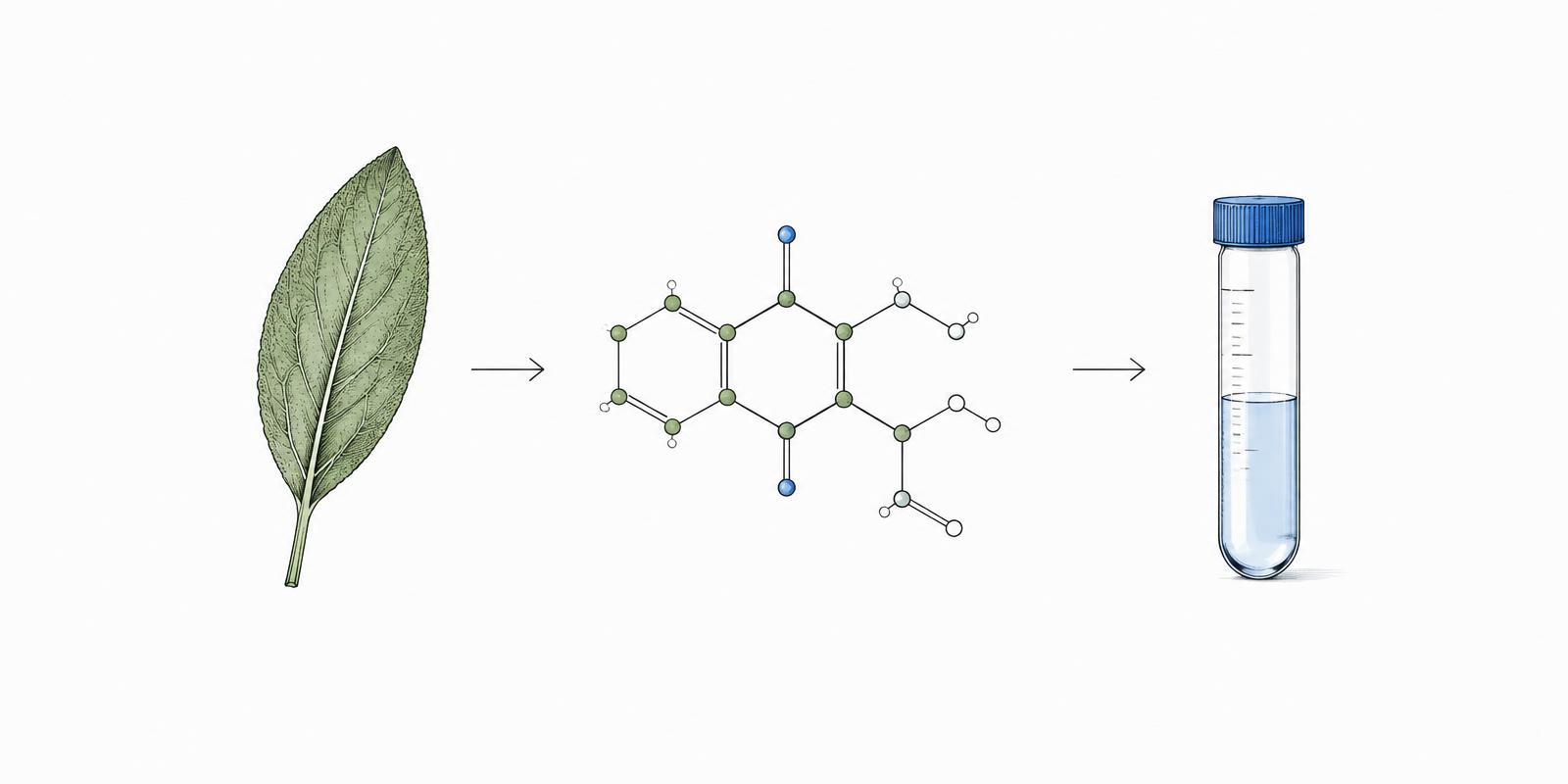
From raw herb to standardized compound to measured biomarker. Step 4 is where most products fall short.
- 01Step 1
Phenotype before anything else
Run the Prakriti assessment for a Vata, Pitta and Kapha baseline and, where available, the markers already on this site (CYP2C19, PGM1, CD25/CD56). This decides which interventions are even candidates. A fast CYP metabolizer phenotype, for example, changes how piperine-potentiated curcumin should be dosed, since piperine inhibits CYP3A4 and P-glycoprotein.
- 02Step 2
Establish an objective baseline
No intervention starts without a measured "before". Match the biomarker to the goal: cortisol and a validated stress scale for ashwagandha, fasting glucose or HbA1c for fenugreek or gymnema, hs-CRP with VAS or WOMAC for curcumin or boswellia, a memory-recall test for bacopa. You cannot biohack what you have not measured.
- 03Step 3
Match intervention to phenotype and goal
Use the solved cases as the menu, routed by what steps 1 and 2 revealed, not by what is trending. One variable at a time. Two interventions in the same window make the result impossible to attribute.
- 04Step 4
Standardize to the active compound
Most "Ayurveda-inspired" products skip this. Dose by standardized extract and bioactive percentage, such as curcuminoid % with piperine co-formulation or withanolide-standardized ashwagandha root, never by "a teaspoon of powder". Raw-herb dosing is why much of the category underperforms its own trial data.
- 05Non-negotiable
Run the safety gate before the first dose
Check herb-drug interactions (piperine's CYP3A4 and P-gp inhibition affects many prescriptions), contraindications such as pregnancy, anticoagulants, thyroid or psychiatric medication, and route anything touching a diagnosis or active prescription to a BAMS practitioner or physician. The gate sits before the recommendation engine, not after it.
- 06Step 6
Re-measure on the evidence's clock
Match the re-test interval to the validating trial: 60 days for ashwagandha and cortisol, 8 to 12 weeks for curcumin and inflammatory markers. A 2-week check-in adds noise to a decision that needs a real signal.
- 07Step 7
Decide, then log it
Continue, adjust or stop. Positive or null, the outcome becomes a labeled data point: this Prakriti and genotype, this standardized intervention, this biomarker change. Every run calibrates the next recommendation.
- 08Exit the wellness lane
Escalate when the data calls for it
Any marker moving into a diagnostic range, such as HbA1c reaching diabetic territory or a pain score suggesting structural injury, routes to a licensed clinician automatically. The platform optimizes within normal and subclinical ranges. It does not manage disease.
See the evidence behind each intervention in the menu.
The solved cases